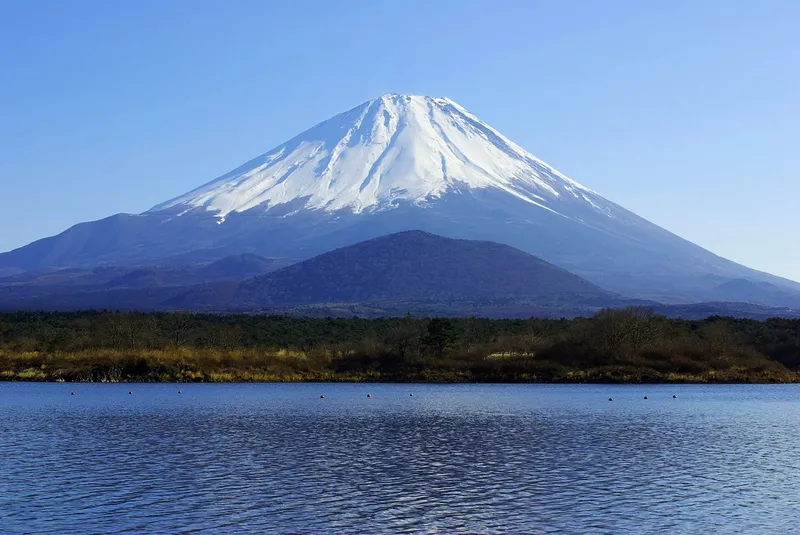
Kyoto and the Fuji Five Lakes in 7 days: bamboo groves, waterfalls and Fuji views
A Sipatra editorial guide compiled from official sources: three days in Kyoto with an early-morning Arashiyama, then the Fuji Five Lakes for Kawaguchiko, the Aokigahara nature trails and Shiraito Falls, with notes on the summer climbing season. Prices were researched in November 2026 and are approximate; verify them before you travel.
Before you go
This is a Sipatra editorial guide, not a trip diary: the route was put together by the Sipatra team from official sources, operator information and current prices. Prices were researched in November 2026 and are approximate. Japanese rail fares and entry fees change, often at the start of the fiscal year in April, so check each figure before you travel.
- Passport
- GB
- Destination
- JP
- Visa
- Visa-free
- Stay (days)
- 90
- Experienced in
- November 2026
- Official page
- https://www.mofa.go.jp/j_info/visit/visa/short/novisa.html
- Valid British citizen passport
- Onward or return ticket may be requested
- Immigration and customs details can be pre-registered on Visit Japan Web (optional)
No application; a short-term stay is granted on arrival at immigration.
The UK is on Japan's visa-exemption list for stays of up to 90 days for tourism. Paid work is not allowed. Japan's international tourist tax rose to 3,000 JPY per departure from 1 July 2026; it is normally built into your air ticket.
Money and connectivity
- Cards are accepted in most hotels, stations and chains, but small restaurants, shrines and rural buses can be cash only. Carry some yen.
- 7-Eleven and Japan Post ATMs reliably accept foreign cards.
- A rechargeable IC card (Suica, PASMO or ICOCA, including the mobile versions on your phone) works on city trains, most buses and in convenience stores.
- Data-only eSIMs are widely sold and are the easiest option; pocket Wi-Fi rental is an alternative for groups.
Best season: November combines Kyoto's autumn colours (usually peaking in the second half of the month) with the clearest Fuji views of the year, as the dry winter air arrives. Mornings at Kawaguchiko can be near freezing, so pack layers. Note that Mount Fuji itself is closed to climbers outside the summer season (see the tip below), so this is a views-and-trails trip, not a summit trip.
Packing list
- Comfortable walking shoes you can slip on and off (temples and ryokan)
- Warm layer and light down jacket for Fuji mornings
- Waterproof shell
- Small towel and hand sanitiser (not every public toilet has paper towels)
- A bag for your own rubbish: public bins are rare
- Coin purse
- Offline map of Kyoto and the Fuji Five Lakes downloaded in Sipatra
- UK driving licence plus a 1949 Convention International Driving Permit if you plan to rent a car
Climbing Mount Fuji is only permitted in the official season: in 2026 the Yoshida Trail was open from 1 July to 10 September, the Shizuoka-side trails closed on the same date. All four trails now charge a 4,000 JPY climbing fee with advance registration, and the Yoshida Trail gate at the 5th Station closes from 14:00 to 03:00 for anyone without a mountain-hut booking, with a cap of 4,000 climbers a day. Off-season climbing involves ice, high winds and no huts or rescue infrastructure; do not attempt it.
Getting there
London → Osaka Kansai (KIX)
- Mode
- flight
- Booked via
- web
Flying into Kansai puts you about 75 minutes from Kyoto and lets you leave from Tokyo at the end, avoiding backtracking. Open-jaw tickets often cost little more than a return.
Kansai Airport → Kyoto
- Mode
- train
- Operator
- JR West (Haruka limited express)
- Minutes
- 80
- Booked via
- counter
Buy at the JR ticket machines or office in the airport station. A Japan Rail Pass is rarely worth it for this short itinerary; compare against single tickets first.
Day 1: Arrive in Kyoto
Keep the first day light. Drop your bags near Kyoto Station and spend the evening walking through Gion and along Shirakawa canal, then up the stone lanes of Ninenzaka and Sannenzaka towards Kiyomizu-dera. Gion's private alleys are off limits to tourists in some sections; follow the signs and never photograph geiko or maiko without permission.
Kyoto Station
The main hub for the Shinkansen, JR lines, subway and city buses. Coin lockers and luggage-forwarding counters are inside.
Business hotel or small ryokan near Kyoto Station
- Type
- hotel
- Nights
- 3
- Area
- Kyoto Station / Shimogyo
Staying near the station keeps the early start for Arashiyama and the Shinkansen on day 4 simple. Prices rise sharply in the autumn-leaves weeks, so book early.
Day 2: Arashiyama at dawn
Arashiyama's bamboo grove is free and open around the clock, which means the only way to experience it quietly is to arrive around sunrise. Take an early JR Sagano Line train to Saga-Arashiyama, walk the grove, then visit Tenryu-ji's garden when it opens. Continue to Okochi Sanso, the former villa of a film actor with a hillside garden and a matcha tea included in the ticket, and finish at Togetsukyo Bridge over the Katsura River.
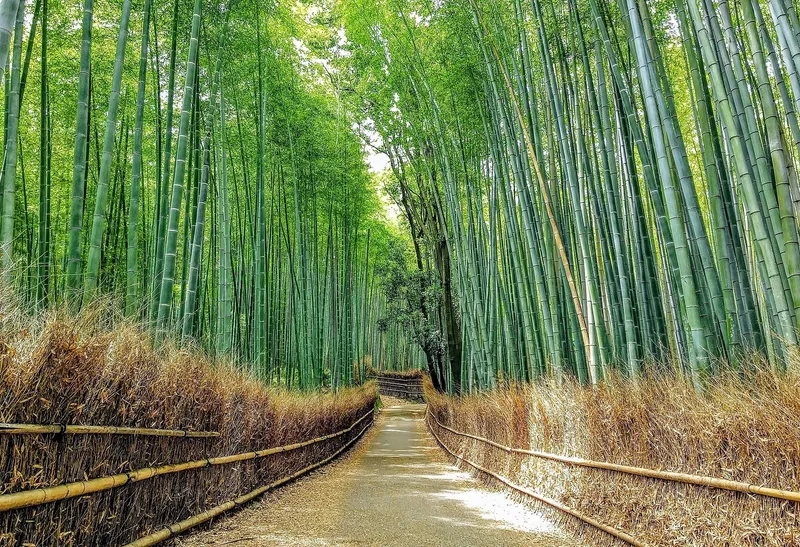
Arashiyama Bamboo Grove
Arrive before 07:30 to see it without crowds. Do not touch, carve or lean on the bamboo.
Tenryu-ji
UNESCO-listed Zen temple with a 14th-century landscape garden. Its north gate opens directly onto the bamboo grove. Garden admission is a few hundred yen; check the current fee at the gate.
- Category
- activity
- Amount
- 1000 JPY
Okochi Sanso garden admission, includes matcha and a sweet.
If you have energy left, the Sagano Romantic Train and Hozugawa river boats run between Arashiyama and Kameoka; both get busy in November, so reserve ahead.
Day 3: Fushimi Inari and the mountain trail
Most visitors photograph the first tunnels of vermilion torii gates and turn back. Keep climbing: the loop to the summit of Mount Inari (233 m) takes two to three hours return, and the crowds thin out quickly above the Yotsutsuji intersection, which also has a fine view over Kyoto. Entry is free and the shrine never closes. Spend the afternoon at Tofuku-ji, famous for its maple valley in late November.
Fushimi Inari Taisha
Directly in front of JR Inari Station, two stops from Kyoto on the Nara Line. An early start or a late evening walk avoids the peak crowds.
Send your large luggage ahead to your Kawaguchiko hotel with a luggage-forwarding service (takkyubin) from your Kyoto hotel desk. It usually arrives the next day and makes the Shinkansen and bus transfer far easier.
Day 4: Kyoto to Lake Kawaguchiko
Kyoto → Mishima
- Mode
- train
- Operator
- JR Central (Tokaido Shinkansen)
- Minutes
- 120
- Booked via
- counter
Take a Hikari or Kodama train; the fastest Nozomi trains do not stop at Mishima. On the right-hand side of the train heading east you may glimpse Fuji between Shizuoka and Mishima.
Mishima Station → Kawaguchiko Station
- Mode
- bus
- Operator
- Fujikyu bus
- Minutes
- 120
- Booked via
- counter
Departures are limited, so check the Fujikyu timetable the evening before.
Kawaguchiko Station
Hub for the Fuji Five Lakes sightseeing buses (Red Line around Kawaguchiko, Green Line to Saiko and Aokigahara). Multi-day bus passes are sold at the station.
Lakeside hotel or ryokan on the north shore of Lake Kawaguchiko
- Type
- hotel
- Nights
- 3
- Area
- Kawaguchiko north shore
North-shore rooms look south across the lake to Fuji. Many ryokan include dinner and an onsen; compare half-board prices.
Day 5: Fuji views around Kawaguchiko
Fuji is usually clearest in the early morning and often disappears into cloud by midday, so start early. Climb the steps of Arakurayama Sengen Park to the Chureito Pagoda for the classic pagoda-and-Fuji view, then return to the north shore of Kawaguchiko and walk through Oishi Park, where autumn kochia and late flowers frame the mountain. If the sky stays clear, the Kachi Kachi Ropeway gives an elevated view across the lake.
Chureito Pagoda (Arakurayama Sengen Park)
About 400 steps up from the shrine; free. Short walk from Shimoyoshida Station on the Fujikyu line. Arrive at sunrise for the clearest air.
Mount Fuji
Japan's highest mountain. Climbing is only allowed in the summer season; outside it, enjoy it from the lakes.
Check a live summit camera or the weather forecast before deciding the order of your days at the lakes: on the first clear morning, do the viewpoints; on a cloudy day, do the forest trails and caves.
Day 6: Aokigahara forest and the lava caves
Aokigahara grew on the lava flow from Fuji's 864 AD eruption, and its mossy, root-covered floor is one of the most unusual forests in Japan. Ride the Green Line bus to the Saiko area and walk the marked nature trail between the Fugaku Wind Cave and the Narusawa Ice Cave, about an hour each way on an easy path. Both caves charge a small entry fee and are low and slippery inside, so wear proper shoes.
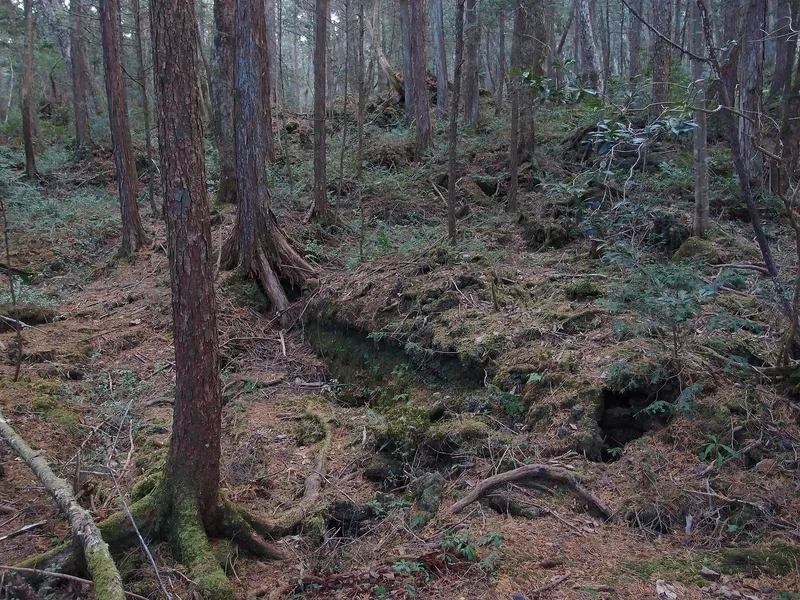
Aokigahara
Stay on the marked trails: magnetic rock can disturb compasses and the forest looks the same in every direction. Treat it as a quiet, respectful place.
Leaving the marked paths in Aokigahara is strongly discouraged; people do get lost here, and phone reception is patchy. Tell your hotel your route, keep to signposted trails and return before dusk.
In the afternoon walk along the quiet shore of Lake Saiko, or continue to Lake Motosu, whose view of Fuji appears on the back of the previous-series 1,000 yen note.
Day 7: Shiraito Falls
On Fuji's south-west side, Shiraito Falls is a curtain of hundreds of thin streams pouring out of the volcanic rock, about 20 m high and some 150 m wide. Entry is free and a short paved path leads down to the basin; the neighbouring Otodome Falls is a five-minute walk away. Public transport from Kawaguchiko is infrequent, so a one-day rental car is the simplest option. Allow roughly an hour each way on Route 139.
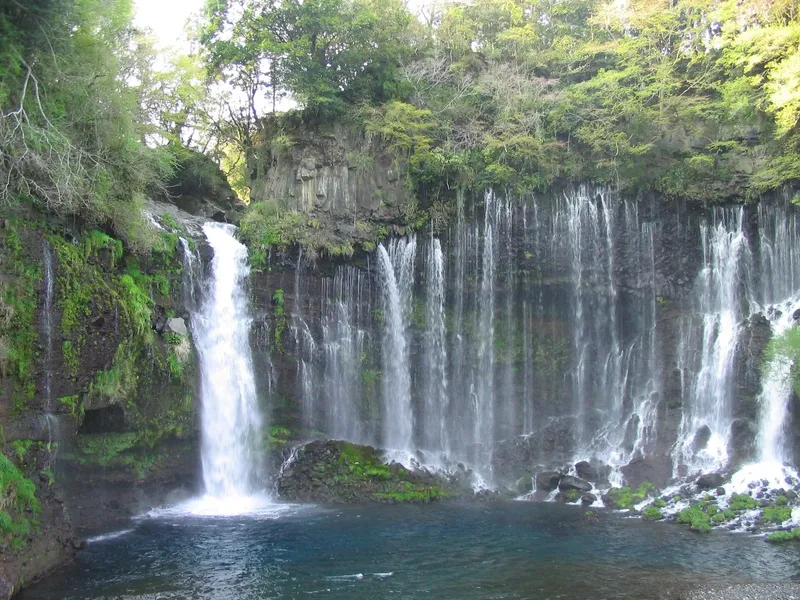
Shiraito Falls
Part of the Fujisan UNESCO World Heritage site. Paid car parks sit next to the entrance.
Kawaguchiko → Shiraito Falls
- Mode
- car_rental
- Minutes
- 60
- Booked via
- web
UK licence holders need a 1949 Convention International Driving Permit to drive in Japan. Japan drives on the left, like the UK.
Getting home
Kawaguchiko → Shinjuku (Tokyo)
- Mode
- train
- Operator
- JR East / Fujikyu (Fuji Excursion limited express)
- Minutes
- 120
- Price
- 4200 JPY
- Booked via
- web
All seats are reserved; booking opens a month in advance and trains sell out on weekends. Highway buses to Shinjuku are a cheaper alternative.
- Category
- visa
- Amount
- 3000 JPY
International tourist tax per departure since 1 July 2026; usually already included in the air fare.
From Shinjuku, Narita Airport is about 80–90 minutes by the Narita Express and Haneda about 45–60 minutes by train or limousine bus. Leave a buffer: Fuji-area buses can be delayed by weekend traffic.
Summary and budget
Excluding flights, a mid-range couple should budget roughly 20,000–35,000 JPY per person per day: hotels are the biggest cost, especially Kyoto in the autumn-leaves weeks and lakeside ryokan with dinner. Transport between Kyoto and Kawaguchiko by Shinkansen and bus is a significant one-off cost, and most sights on this route are free or cost under 1,500 JPY. These are approximate figures based on research in November 2026.
Editor's view: skip the midday bamboo grove, which is shoulder to shoulder; dawn is the whole point. If you only get one clear morning at the lakes, spend it at the Chureito Pagoda or on the Kawaguchiko north shore rather than travelling. Would we plan it the same way again? Yes, but with one extra night at the lakes as weather insurance.
Top three
- The Arashiyama bamboo grove before the crowds arrive
- Sunrise Fuji from the Chureito Pagoda
- The curtain of streams at Shiraito Falls